Everytime blower starts, dust, pollen, and pet dander around get sucked in inside the ductwork. This air (with all the pollen and dust and n types of harmful particles) spreads across rooms and settles on furniture and lungs. Dirty passages also force the fan motor to push harder, raising power bills. Even a thin layer of debris can lower airflow by ten percent.
Utility studies show clean passages can raise efficiency by up to twenty percent. That cuts the power bill and eases strain on compressors. Faster airflow lets rooms reach set temperature sooner, so the system cycles off quicker and parts stay cooler. Together, those small gains add up across the year.
DIY or Hire a Pro?
When the duct lines can be readily accessed, the dirt consists of simple dry dust as well as when you do not find any mold or rodent droppings, you can do the job yourself. In case of damp sludge, strong odor and torn up insulation, hire an expert.
Long flex lines hidden in tight attics also call for a truck-mounted vacuum. When unsure, lift one register and wipe the metal. If the cloth comes away mostly gray and no stains are visible, a homeowner can handle the job. Otherwise, let a professional take over.
If you’re still unsure whether to clean the ducts yourself or call a pro, this guide on DIY vs. professional air duct cleaning can help you make the right decision.
Essential Duct Cleaning Tools and Prep
Gather your gear first. For efficient cleaning you will need:
- Step Ladder
- #2 Screwdriver
- Wet/Dry Vacuum with a 12-foot Hose
- Soft Brush
- Dryer-Vent Rod Kit
- Microfiber Cloths
- Painter’s Tape
- N95 mask
- Goggles
- Gloves
Next, turn off power to the furnace at the breaker and switch the thermostat to “off.” Slide nearby chairs out of the way, then seal each supply vent with tape so dust stays in the ducts until you are done vacuuming.
Optional Extras
A small leaf blower can push dust toward one opening that the vacuum can reach. If you try this shortcut, seal all other registers with plastic film and tape first, or debris will burst into living rooms.
A bright headlamp helps in dark attics, and a handheld inspection mirror lets you check elbows without crawling through insulation. Keep a drop cloth below each vent to protect carpet and baseboards from falling screws or metal shavings.
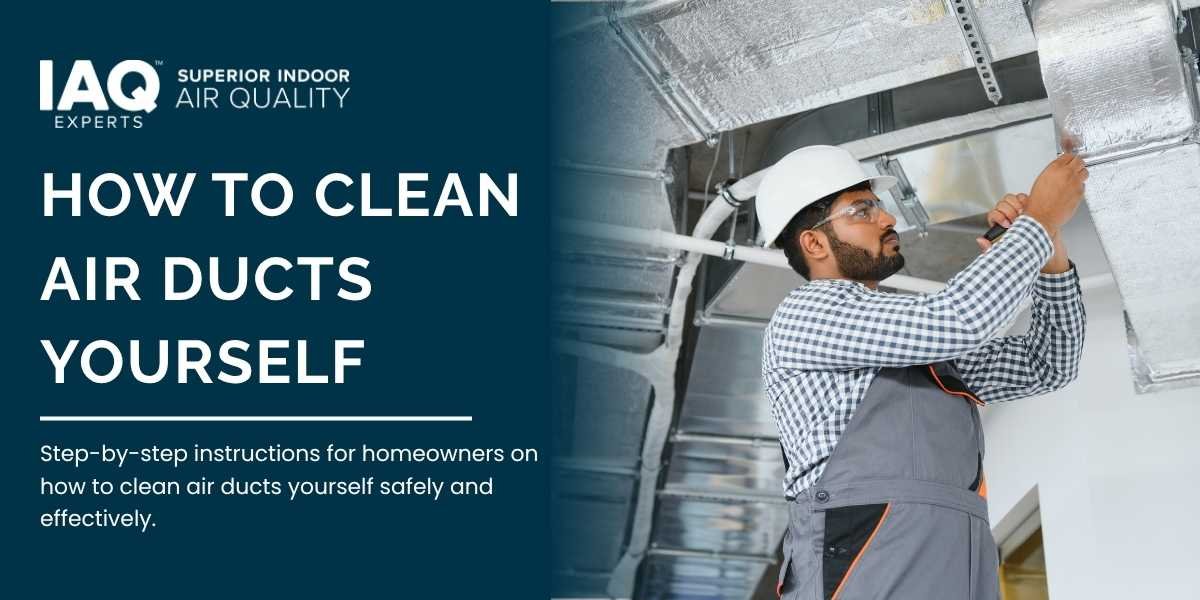
Step-by-Step Process: How to Clean Heating and Air Conditioning Ducts Yourself
Till now we have covered the basics of cleaning an air duct, now let’s uncover how:
- Remove registers and returns. Use the screwdriver to lift each cover. Label them so they go back to the same room later.
- Inspect the throat. Shine a flashlight inside. Note heavy clumps, rust, or water. Stop and call a pro if you see slime or animal droppings.
- Loosen debris. Insert the soft brush and tap duct walls to shake dust free. For ceiling vents, use a short pole and work gently to avoid tearing seams.
- Vacuum near openings. Fit the crevice tool on the vacuum hose. Guide the tip along the bottom of each branch, moving slowly. Empty the drum when half full to keep suction strong.
- Sweep deeper runs. Thread the dryer vent brush into straight metal ducts until resistance is felt. Twist clockwise while pulling back to drag dirt toward the mouth. Vacuum again. This move is the key step in learning how to clean ductwork without special machines.
- Clean the return plenum. Unscrew the large grille, vacuum the cavity, then wipe walls with a damp microfiber. The return carries the most dust, so give it extra time.
- Wash covers. Scrub registers in warm soapy water, rinse, and dry fully. Lightly sand any rust spots and touch up with HVAC paint if needed.
- Change the filter. Slide out the old filter, vacuum loose grit inside the slot, and insert a fresh MERV-rated filter with arrows pointing toward the blower.
- Restore power and test. Peel tape off vents, turn the system on, and run the fan for fifteen minutes. Any loose dust will migrate to the new filter. Check the filter; replace again if it looks gray.
Common Mistakes to Avoid
During the process, mistakes are imperative but having a broad sense of it beforehand goes a long way:
- Skipping safety gear exposes eyes and lungs to fine dust.
- Using a household vacuum can clog its small hose and overheat the motor; stick with a shop vac.
- Pushing rods through the flex duct may puncture the liner. Clean only the plenum and visible boots if your home uses flex.
- Leaving power on while brushing spreads dirt through the house. Always shut the system off first.
- Forgetting the filter after the job lets shaken debris blow back into rooms.
- Spraying chemicals without training may release fumes and void warranties. Mechanical cleaning is the safer choice for homeowners.
- Ignoring small leaks wastes the effort. Seal gaps with foil tape or mastic while covers are off.
How Often to Clean and What Controls Timing
Your house will require a duct service every three to five years – that’s common. Pets, smokers, or residents with asthma may need yearly checks. Renovation dust can coat metal in weeks. Rural homes on gravel roads pull in more grit than city dwellings. Climate also plays a role. Moist areas grow mold faster, while dry zones gather wind-blown silt. Watch supply vents every six months. If you see a gray ring or smell musty air when the blower starts, plan how to clean out air ducts soon.
If a new filter turns dark in under thirty days, deeper buildup lurks somewhere in the system. Homes with shedding pets, recent wildfire smoke, or heavy nearby traffic often need an inspection every two years even if vents look clean. People with compromised immune systems should follow the shorter schedule to cut allergen load. After any duct repair, recheck cleanliness, because installers may leave bits of sheet metal and fiberglass behind.
Closing Thoughts
It’s not so difficult to clean house air ducts, yes it takes time and patience, but all of it pays off with cleaner air and lower bills. Follow the steps, use the right tools, and respect limits. Call IAQ Austin – Air Duct Cleaning if you encounter mold, pests, or damage.
Keep photos and dates after each project so you can set the next reminder with confidence. Clean ducts, clear air, steady costs – all from one afternoon of focused work. Put a smart reminder in your phone for the next inspection date, and store all tools in one labeled bin so they are ready when needed.